Zadanie 8.4 – Matura Dwujęzyczna 2025 – Ekologia
Dział: Ekologia, Ewolucjonizm
Treść wprowadzająca
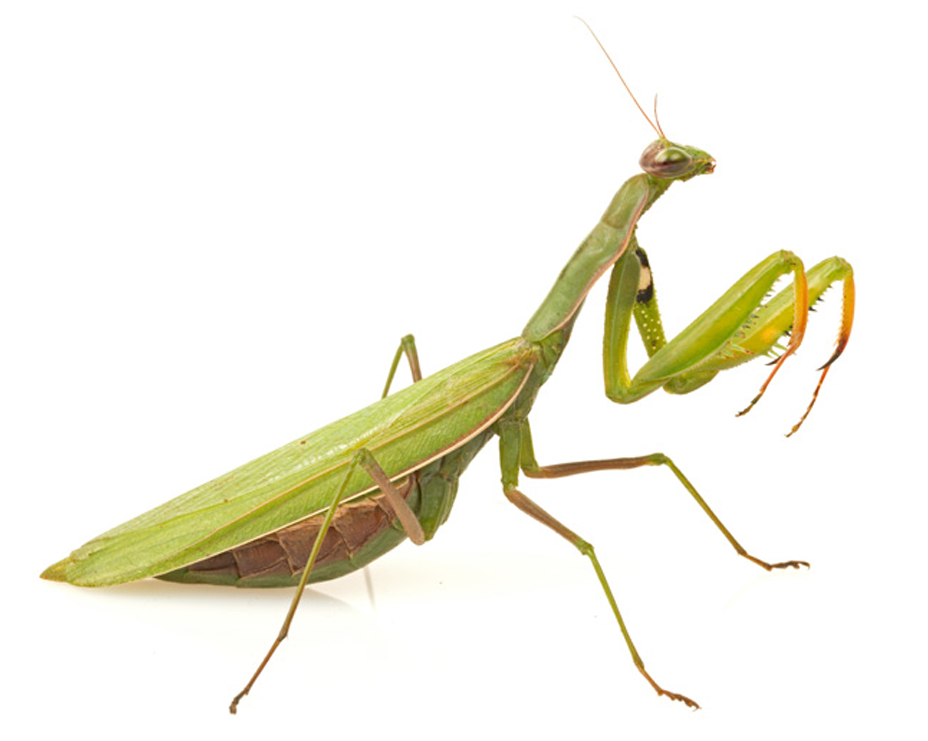
The European mantis (Mantis religiosa) is a large insect with a very powerful grasping apparatus formed by the adaptation of the first pair of legs. The mantis sits still and waits for its prey (another insect or a spider) to come close enough to catch it. The prey is eaten alive. The mantis is an extremely thermophilic species. In Poland, it prefers very sunny glades and the edges of pine forests overgrown with heather. The female produces several cocoons, which can contain between 100 and 200 eggs. The eggs overwinter and hatch in the spring. The larvae are similar in appearance to the adults, but smaller and without wings. The larvae moult seven or eight times after hatching. The final moulting results in the adult form. In Poland, the mantis was mainly found in the Sandomierz Basin and in Outer Subcarpathia until the early 20th century. By the beginning of the 21st century, the species had spread to many new sites, most of them not far from the two main populations of Sandomierz and Subcarpathia. After 2010, new sites were increasingly found in other southern regions of Poland: Silesia, Lesser Poland, the Holy Cross Mountains and southern Mazovia. In the exceptionally warm year of 2015, the mantis rapidly spread as far as Podlachia and the Mazurian Lake District. At times, when climatic conditions were optimal, the size of national populations reached several thousand adults. Changes in the geographic range of the mantis, associated with the occurrence of increasingly warm summers in Poland, favour the survival of the species, and winters with a low number of cold days favour the survival of egg cocoons. Moreover, during warm summers, the mantis has an abundance of food, especially orthopteran insects, such as grasshoppers, crickets and their relatives.
Polecenie
Based on the information given above, name one structural feature of the European mantis’ legs that is an adaptation to predation, and explain the advantage of this adaptation.
Materiał źródłowy
Rozwiąż to zadanie online i sprawdź odpowiedź
Podobne zadania z działu Ekologia
- Zadanie 17 – Matura Czerwiec 2026 — Dokończ zdanie. Wybierz właściwą odpowiedź spośród podanych. Niższa różnorodność genetyczna populacji starca zwyczajnego w Chinach w porówn…
- Zadanie 18 – Matura Czerwiec 2026 — Wyjaśnij, dlaczego od czasu pojawienia się w wodach zatoki Bodega kraba brzegowego wzrosła liczebność populacji małży G. gemma. W odpowiedz…
- Zadanie 21.1 – Matura Maj 2026 — Podaj nazwę zależności międzygatunkowej występującej między pająkiem z rodzaju Pamphobeteus a żabą C. royi. Odpowiedź uzasadnij z uwzględni…
- Zadanie 22.1 – Matura Maj 2026 — Wypisz z tekstu żywicieli pośrednich oraz żywicieli ostatecznych przywry B. polymorphus.
- Zadanie 22.2 – Matura Maj 2026 — Uzasadnij, że obecność racicznicy zmiennej jest niezbędna do zamknięcia cyklu życiowego przywry B. polymorphus.